A sloping yard doesn’t always mean you have to give up on having a good-looking lawn. You can turf on a slope, but it usually takes a bit more planning than on a flat block, especially when drainage, soil stability, and water runoff need to be considered. This is a pretty common situation across the wider Western Sydney area, where many homes have backyards with some kind of slope.
Some sloping yards are fairly simple to turf, while others can end up with problems like soil washing away, patchy growth, or the turf not settling properly. In this post, we’ll look at what can make sloping yards harder to turf, what needs to be checked before getting started, and when extra work may be needed first.
What Makes Sloping Yards Hard to Turf?
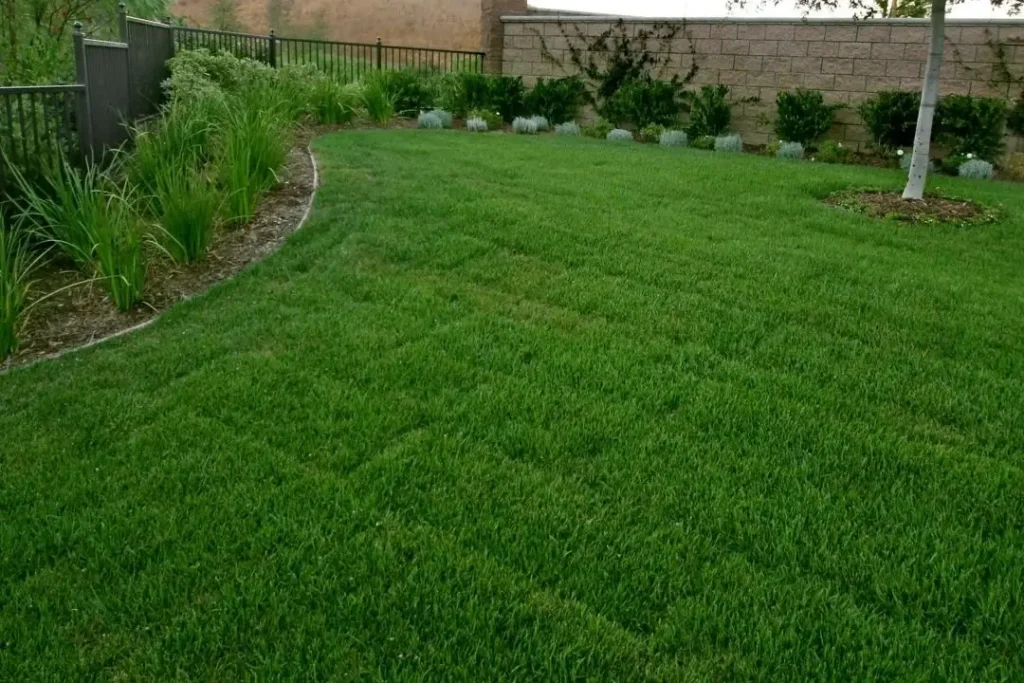
Sloping yards can be harder to turf because water doesn’t soak in as evenly as it does on flatter ground. When it rains or the area is watered, runoff can move down the slope quickly and wash away soil, nutrients, or even sections of newly laid turf before the roots have time to establish.
Erosion can be a problem, especially if the slope is already bare or unstable. In that case, laying turf without fixing the underlying issue can lead to soil movement over time. Some parts of the slope may also dry out faster than others, making it harder for the lawn to establish evenly.
What to Check Before Laying a Turf
Before laying turf on a sloping yard, it helps to look at the site properly first. Here are a few key things to look out for:
- How steep the slope is. A gentle slope is usually much easier to turf than a steep embankment. If the yard is very steep, turf on its own may not be the most practical option.
- How water moves through the area. A good time to check this is after decent rain. Look for signs like water rushing down the slope, soil or mulch being washed out, shallow channels forming in the ground, or puddles sitting at the bottom. These are signs the area may have runoff or drainage problems, which can make it harder for new turf to establish properly.
- The condition of the soil. Check whether the soil is hard and compacted, very clay-heavy and sticky when wet, loose and sandy, or poor-quality fill. Turf usually establishes better when the soil is workable, drains reasonably well, and can hold enough moisture and nutrients.
- How much sun the area gets. Some turf varieties handle shade better than others, while some do best in full sun. Knowing how much light the slope gets will help you choose a more suitable turf type.
- Whether the slope is already unstable. Look for signs like exposed roots, cracks in the soil, loose ground, washed-out sections, or areas where soil is already slipping downhill. If the slope is already moving or eroding, that usually needs to be addressed before turf is laid.
Best Turf for a Sloping Yard
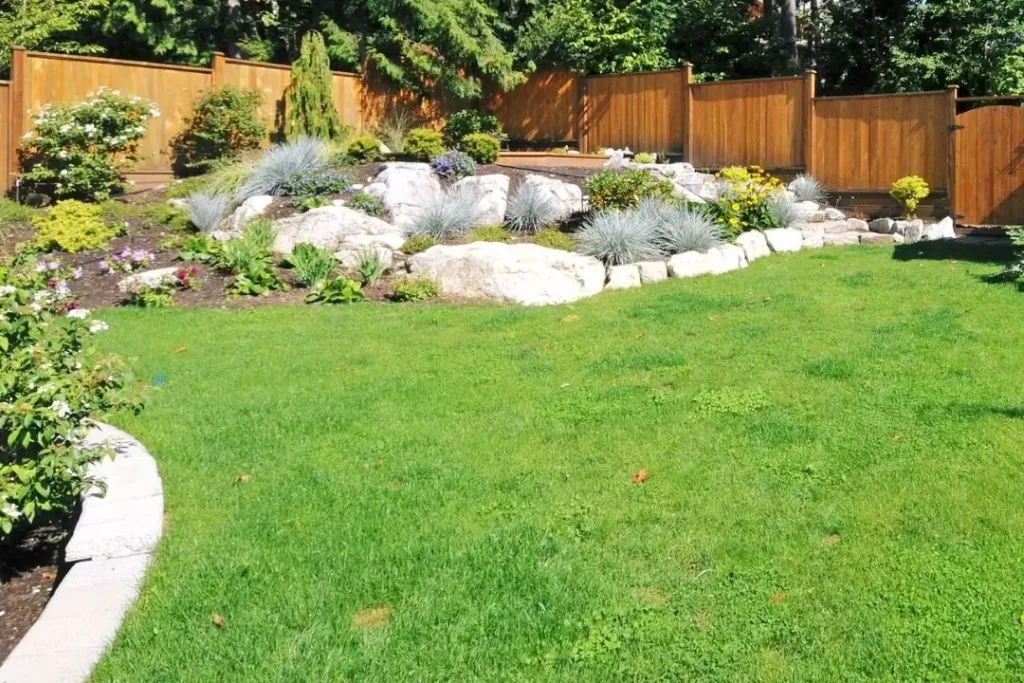
The best turf for a sloping yard is usually one that can establish well, suit the conditions on site, and form a strong root system. The right choice will depend on how much sun the area gets, how much wear the lawn needs to handle, and how much maintenance you’re happy to keep up with. Looking at different turf varieties can also help you work out which one is most suitable for your slope.
Some turf varieties that can suit Western Sydney properties include:
- Couch – A good option for sunny sloping areas because it spreads well and establishes strongly in the right conditions.
- Kikuyu – It grows vigorously, recovers well from wear, and can suit family homes where the lawn gets regular use.
- Zoysia – Works well for a dense, tidy-looking lawn. It’s usually slower to establish than other varieties, but it gives good coverage once it settles in.
- Buffalo – A better option for slopes that get a bit more shade.
How to Prepare A Sloping Yard For Turfing
1. Clear the Area
Remove weeds, old grass, and loose debris so the new turf doesn’t compete for water or nutrients.
2. Shape the Ground Properly
The area should be graded so water moves through it in a controlled way instead of rushing straight down the slope. In some yards, this may also mean smoothing out rough or uneven sections.
3. Improve the Soil If Needed
If the soil is poor, compacted, or low in nutrients, it may need underlying soil or soil conditioners to create a better base for the turf to establish.
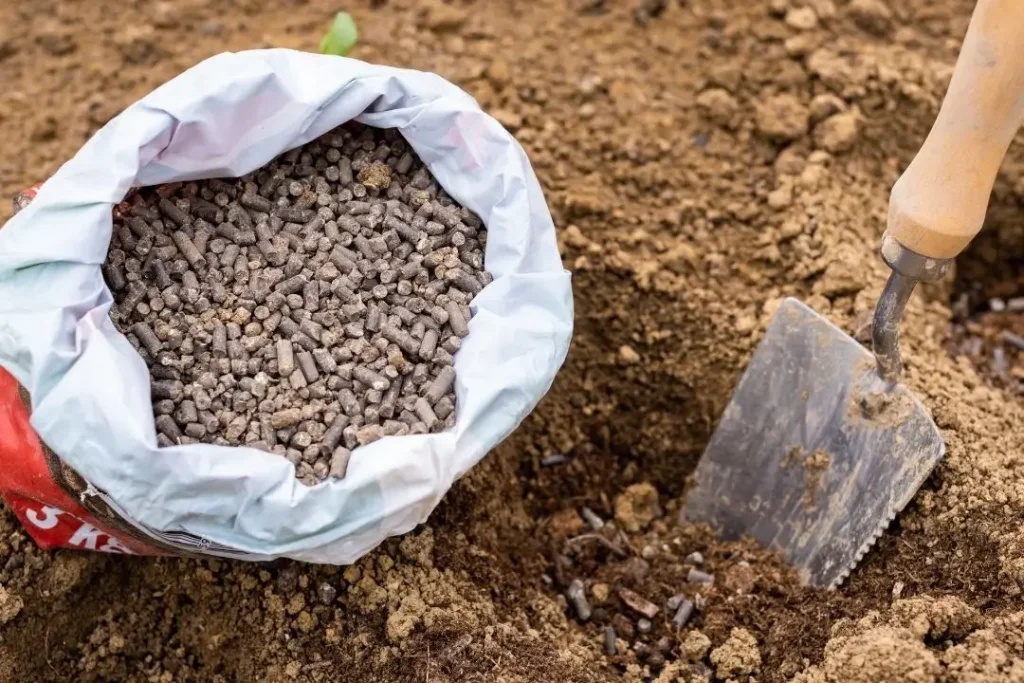
4. Apply Starter Fertiliser If Needed
A starter fertiliser helps support early growth and gives the new turf a better start.
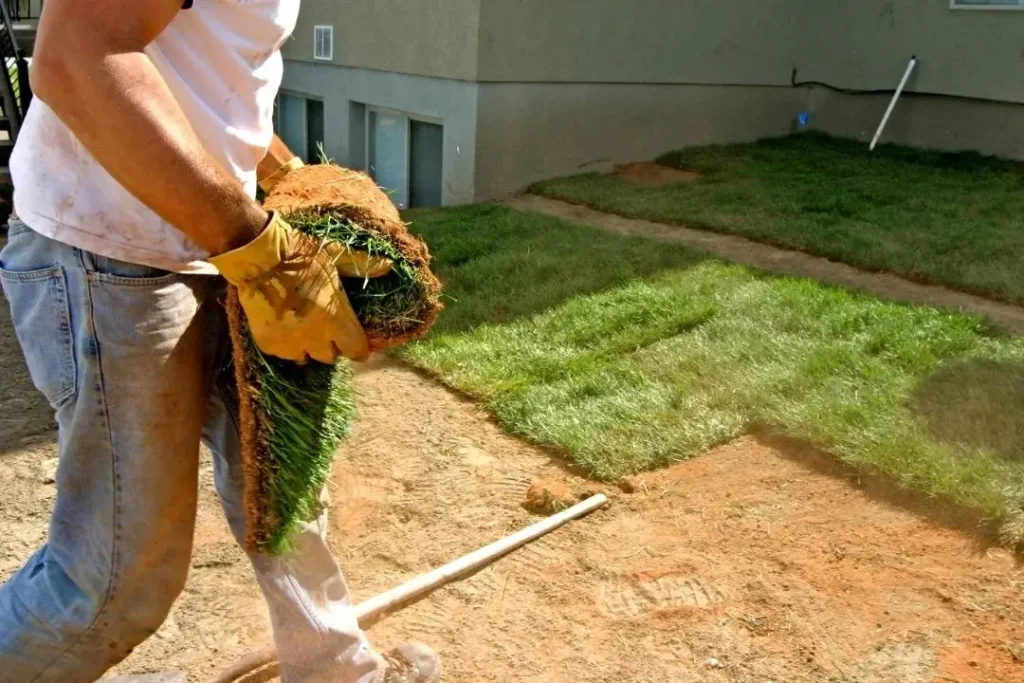
5. Lay the Turf Carefully
The turf should sit firmly against the soil underneath with good contact across the surface. On steeper sections, extra care may be needed to stop it from shifting while it settles in.
6. Manage Watering Carefully During Establishment
The turf needs enough water to establish, but not so much that it causes runoff or movement on the slope. The goal is to keep it moist without washing the area out.
When Retaining Walls or Terracing May Be Needed
If the block is very steep or already showing signs of erosion, it makes more sense to do extra structural work first instead of trying to turf the whole area.
Retaining walls can help create flatter sections, improve stability, and make the yard more practical to use. Terracing can do something similar by breaking one steep slope into smaller levels, which are often easier to turf, plant out, or work into the overall design. This is something to keep in mind if you’re landscaping a sloping block, where some yards need a broader solution than turf alone.
Sometimes, the best result comes from mixing different elements instead of covering the whole slope with lawn. A yard may work better with a combination of turf, retaining walls, garden beds, and planted areas, especially where drainage and soil movement are ongoing concerns.
Is Turf the Right Option for Your Sloping Yard?
Turf can be a great option for a sloping yard when the slope is manageable and the site is prepared properly. It can improve the look of your yard, cover bare ground, and make the space more usable. That said, turf isn’t always the best fix for every slope. If the yard is too steep or already has drainage or erosion problems, it may need more than just turf to work well long-term. In that case, it makes more sense to look at the whole yard and consider whether drainage work, retaining, terracing, or planting should be part of the solution too.
If you need help with a sloping yard, our Blacktown landscaping team can work out whether turf is the right fit or if a different solution would suit the site better. We work with homeowners across Western Sydney, including those with steep slopes in Hills District suburbs like Rouse Hill and Kellyville. So if you’re looking for landscapers Baulkham Hills homeowners trust for solutions for steep slopes, we can help.
Call us today on (02) 8609 3360 to get professional advice for turfing your sloping yard!